STYLE GUIDES · OCCASIONS
What to wear to a wedding: guest dress codes explained
The dress code on an invitation is the couple telling you how formal their day will be. Here's what each one usually means, and what else to think about before you choose an outfit.
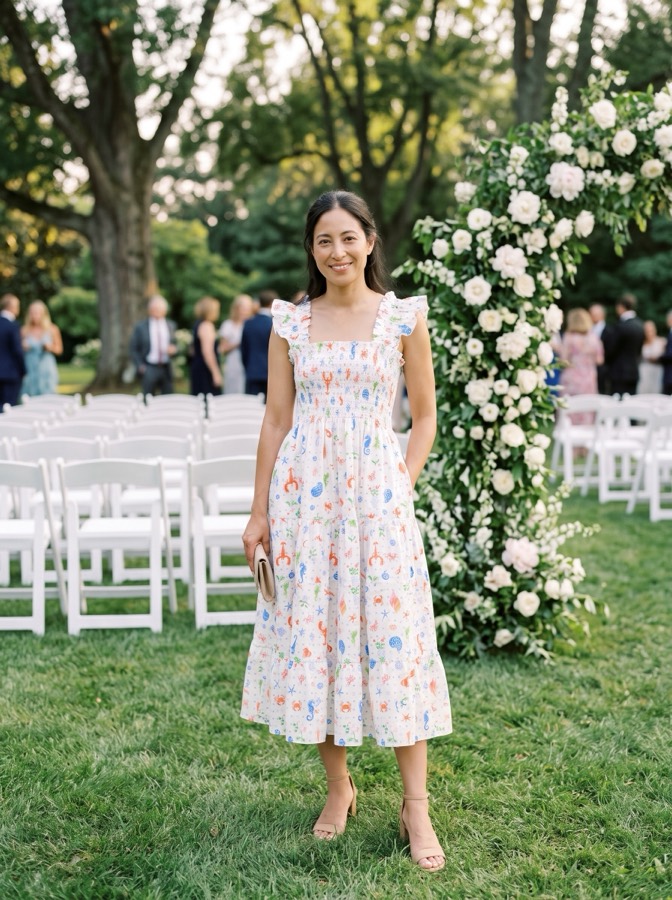
The dress codes, from most to least formal
- White tie
- The most formal dress code, and the rarest. Floor-length evening gowns, or a black tailcoat with a white bow tie, white waistcoat and formal shoes.
- Black tie
- An evening event with formal wear: a floor-length gown, or an elegant cocktail dress or dressy separates in luxurious fabrics; a tuxedo with a black bow tie.
- Black tie optional or formal
- Nearly as dressy as black tie, with more choice: a floor-length or elegant cocktail-length dress or a dressy jumpsuit; a tuxedo, or a dark suit with a tie.
- Cocktail or semi-formal
- The most common dress code. A knee-length or midi dress, a dressy jumpsuit or polished separates; a suit, with or without a tie depending on the setting and time of day.
- Dressy casual
- A step above everyday: a sundress, a skirt or tailored trousers with a nice top; chinos or trousers with a collared shirt, with or without a blazer.
- Casual
- At a wedding, casual still means put together. Think of what you'd wear to a nice lunch, and save jeans for when the couple says so.
- No dress code
- Look at the time and the venue. An evening wedding in a hotel ballroom points to cocktail or formal; a daytime wedding in a garden points to dressy casual. If in doubt, cocktail attire rarely looks out of place.
Many couples explain their dress code on their wedding website, sometimes with examples. That always overrides a general guide like this one.
Read the venue and the time of day
- Daytime weddings suit lighter colors, prints and lighter fabrics. Evening weddings lean more formal, with deeper colors and richer fabrics.
- Garden and outdoor weddings: heels can sink into grass, so choose block heels, wedges or flats. Bring a layer, since evenings cool down quickly.
- Beach weddings: breathable fabrics like linen and cotton, flat sandals, and nothing that's ruined by sand or wind.
- Religious ceremonies may expect covered shoulders or knees, or a head covering. A wrap or light jacket keeps you covered for the ceremony and comfortable later.
Colors to think twice about
In many Western weddings, white, ivory and cream are left for the couple, and an all-white outfit is best avoided unless the couple asks for it. Color customs vary between cultures and families, so if you're going to a wedding with traditions you don't know well, ask the couple or a family member. They'll usually be glad you did.
A quick checklist before you buy
- Read the invitation and the wedding website for the dress code.
- Check the venue, the time of day and the weather.
- Plan for the whole day: the ceremony, standing during photos, and dancing at the reception.
- Choose shoes you can wear for hours, and a layer for the evening.
- Order early enough to try everything on, and to return or exchange it if needed.
Try it in Little Dresser. The Wedding guest pack adds three settings for 30 days, a garden ceremony, a ballroom reception and a rehearsal dinner, plus 10 fittings. Paste links to the dress or suit you're considering and see it in the setting before you buy.